Injection moulding material challenges can have a much bigger impact on a project than many customers expect at the outset. Material choice influences not only how a part performs, but also how easily it can be manufactured, how consistent it will be across production, how well it meets compliance expectations, and how much risk is built into the project before tooling is even cut. When the wrong assumptions are made early, problems often appear later in the form of rework, delays, added cost, or underperforming parts.
At Flambeau Europe, we help customers avoid those issues by treating material selection as a practical engineering decision rather than a simple box-ticking exercise. Our role is not just to mould parts. It is to help customers make better-informed decisions from the start, using technical insight, application knowledge, and a more joined-up approach to problem-solving.
Why Injection Moulding Material Challenges Matter So Much
Material choice affects performance, cost, and manufacturability
A material decision never affects only one part of the project. A polymer that looks cost-effective on paper may create processing issues in production. A material chosen purely for strength may introduce unnecessary cost or make moulding more difficult. A part designed without enough consideration for shrinkage, wall thickness, or environmental exposure may perform inconsistently even if the moulding process itself is sound.
That is why injection moulding material challenges need to be considered early and carefully. The most successful projects are rarely those where the material is chosen in isolation. They are the ones where performance, manufacturability, cost, and long-term use are considered together.
Why Injection Moulding Material Challenges Become Expensive Project Problems
Material-related issues can escalate quickly. A poor choice may lead to warping, sink marks, dimensional inconsistency, poor durability, or unexpected production inefficiencies. In some cases, the problem is not that the material is objectively wrong, but that it is wrong for the specific application, geometry, or production requirements.
That is where a broader understanding of injection moulding becomes important. The material has to work not just in theory, but in a real production environment, under real operating conditions, and within the quality expectations of the final application.
Better material decisions reduce risk from day one
The earlier material risks are identified, the easier they are to solve. Once tooling is cut, the cost of changing direction rises significantly. Better decisions at the beginning help protect time, budget, and reputation later on.

Common Injection Moulding Material Challenges
Injection Moulding Material Challenges Around Cost and Performance
One of the most common challenges is balancing performance requirements against commercial pressure. A lower-cost material may seem attractive initially, but if it compromises durability, consistency, or processing stability, the project can become more expensive in the long run. On the other hand, a higher-spec material may add unnecessary cost if the application does not genuinely require it.
This is why choosing the right plastic material is rarely a straightforward exercise. The goal is to match the material to the part’s real-world needs, not just to a broad assumption about price or strength.
Managing wall thickness, shrinkage, and stability
Material behaviour plays a major role in how a part moulds and performs. Shrinkage rates, flow characteristics, and wall thickness relationships all influence whether a component remains dimensionally stable and repeatable across production. Some injection moulding material challenges appear only once a design enters production, which is why early technical review is so valuable.
Injection Moulding Material Challenges in Durability, Weight, and Functionality
In many applications, customers want a part that is strong, lightweight, functional, and commercially viable all at once. Those goals do not always align perfectly. Material expertise helps identify where trade-offs exist and how to make practical decisions without compromising the wider success of the project.
Meeting compliance or environmental expectations
Some material choices are influenced by more than performance alone. Compliance requirements, recyclability goals, environmental expectations, or sector-specific approvals can all shape what is and is not suitable. That is where material expertise becomes especially valuable, because the right answer depends on the application, not just the datasheet.

How Better Material Knowledge Solves Injection Moulding Material Challenges Earlier
Understanding polymer behaviour before tooling begins
The best way to solve material problems is to prevent them. When polymer behaviour is considered early, customers can make better decisions before tooling investment locks the project into a more difficult path. That includes understanding how a material will flow, how it will shrink, how it will respond to geometry, and how it will perform over time.
Matching the material to the application, not just the drawing
A drawing alone does not tell the whole story. The way a part is used, assembled, handled, loaded, or exposed to environmental conditions all matter. Better outcomes come when material decisions are based on the application as a whole rather than the component in isolation.
This is also where sustainable product design principles can support stronger decisions, particularly when customers are trying to balance performance with longer-term environmental and commercial objectives.
Designing for Manufacturability to Reduce Injection Moulding Material Challenges
A material may look right on paper but still create avoidable production difficulties. That is why material choice needs to be considered alongside tooling strategy, process stability, and repeatability. Good design and good production should reinforce each other, not compete.
How Flambeau Solves Injection Moulding Material Challenges
We start with the real performance requirement
At Flambeau Europe, we begin by looking at what the part actually needs to do. That includes the end-use environment, the functional demands, the quality expectations, and the wider project goals. By starting there, we can help customers avoid decisions based on assumptions that may not hold up in practice.
We help customers make more informed material decisions
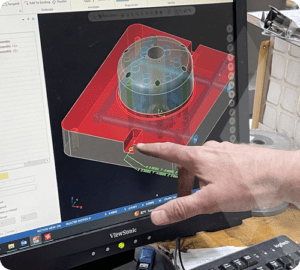
Our support is designed to reduce guesswork. We work with customers to assess options, identify risks, and make more confident material choices earlier in the project. This is where engineering support for injection moulding becomes particularly valuable, because many problems can be avoided before they develop into production issues.
We combine material insight with tooling and process thinking
Material selection does not happen in a vacuum. The right decision depends on how the part will be tooled, moulded, inspected, and supplied. That is why we combine materials knowledge with wider project thinking, including tooling optimisation and end-to-end injection moulding support where needed.
We reduce risk before production begins
The real value of materials expertise is risk reduction. Better upfront decisions save time, reduce rework, and make it easier to protect part performance over the long term. This is also why projects involving more challenging parts often benefit from the type of problem-solving approach shown in how Flambeau added value to complex injection moulding parts.
Why Bespoke Support Matters in Material Selection
Material choice is rarely a one-size-fits-all decision
Different parts, customers, and applications create different priorities. One project may need durability above all else. Another may depend on tight tolerances, lower weight, or stronger environmental performance. Bespoke support matters because material choice always sits within a wider context.
Better collaboration leads to better technical outcomes
When customers and manufacturer work more closely together, material challenges become easier to solve. Open discussion around requirements, constraints, and trade-offs leads to stronger decisions than a transactional process ever could.
A stronger manufacturing partner helps avoid trial-and-error
That is one of the biggest advantages of working with a more capable partner. Instead of learning through expensive mistakes, customers can move forward with better guidance and more confidence. In many cases, that support also ties into related improvements around waste reduction, as explored in reducing waste in manufacturing and the plastic regrind process.
What Customers Gain from Solving Material Challenges Early
When material decisions are handled well, customers gain more than a technically correct part. They gain:
- better performance and consistency
- fewer delays and less rework
- more confidence before tooling is cut
- a smoother route from concept to production
- stronger long-term project reliability
Conclusion: Material Expertise Reduces Risk
Injection moulding material challenges are rarely minor details. They shape performance, manufacturability, cost, and project risk from the very beginning. That is why early material expertise matters so much. Better decisions made up front help prevent avoidable problems later.
At Flambeau Europe, we help customers solve those challenges through practical technical support, bespoke guidance, and a more joined-up manufacturing approach. If you are looking for a partner who can help you reduce risk before production begins, explore our Complete Bespoke Solutions, learn more about our Injection Moulding services, or contact us to discuss your project.