One of the most practical ways to reduce logistics emissions is to shorten the journey between manufacturer and customer. Sustainability discussions often focus on energy use, materials, recycling, and waste inside the factory, but what happens after a product leaves production matters too. Distance travelled, freight mode, the number of handovers, and the structure of the wider supply chain all influence the environmental impact of getting a product to market.
Local manufacturing changes that equation at source. Instead of trying to make a long international supply chain slightly more efficient, businesses can potentially remove entire transport stages altogether. For UK customers, manufacturing closer to home can mean fewer freight miles, simpler logistics, and a supply model that delivers environmental and operational benefits at the same time.
Why reducing logistics emissions requires looking beyond the factory
Sustainability continues after production
A manufacturer can improve energy efficiency, minimise scrap, and optimise material use, but products still need to reach the customer. Freight therefore forms part of the overall environmental picture.
The impact depends on several factors, including how much is being transported, how far it travels, and which transport mode is used. A supply chain built around international manufacturing may add thousands of miles before the product even begins its final domestic journey.
Transport miles repeat throughout the product lifecycle
A single shipment is only one part of the story. If the same components are replenished every month, quarter, or year, the same transport route repeats throughout the product lifecycle.
That makes manufacturing location a long-term sustainability decision. A relatively small difference in one shipment can become substantial when multiplied across years of regular production and supply.
This connection between environmental decisions and long-term operational performance also sits behind how sustainable manufacturing practices support long-term client success, where sustainability creates value through efficiency and resilience rather than existing as a separate corporate initiative.

How supply-chain design can reduce logistics emissions
Shorter routes remove transport rather than compensate for it
One of the simplest ways to reduce logistics emissions is to avoid unnecessary transport in the first place.
If a product is manufactured overseas for a UK customer, it must first travel into the country before joining the domestic distribution network. A product manufactured in the UK removes much of that international journey altogether.
This is a fundamentally different approach from trying to offset or optimise a journey after it has already been created. Better supply-chain design can eliminate part of the environmental impact at source.
Fewer handovers create a simpler logistics chain
A long-distance supply chain can involve factory dispatch, inland transport to an export terminal, port handling, sea freight, UK customs and handling, distribution centres, and final delivery.
Local production can reduce that chain significantly. Fewer movements generally mean less handling, fewer points of disruption, and a clearer route between production and customer.
The operational side of that advantage is explored further in Ramsgate logistics advantages for UK and European distribution, where proximity supports not only shorter journeys but also better responsiveness and visibility.
The final UK journey often exists either way
This is an important distinction when comparing local and offshore manufacturing.
Imagine two identical products ultimately need to reach the same distribution centre in Manchester. Both may still require a UK road or rail journey to reach that destination. The difference is that the offshore product has already completed a much larger international journey before that domestic leg begins.
Local manufacturing does not eliminate every transport mile. It removes many of the additional miles created solely by manufacturing the product far away from its end market.
Why freight mode matters when reducing logistics emissions
Not all transport modes have the same impact
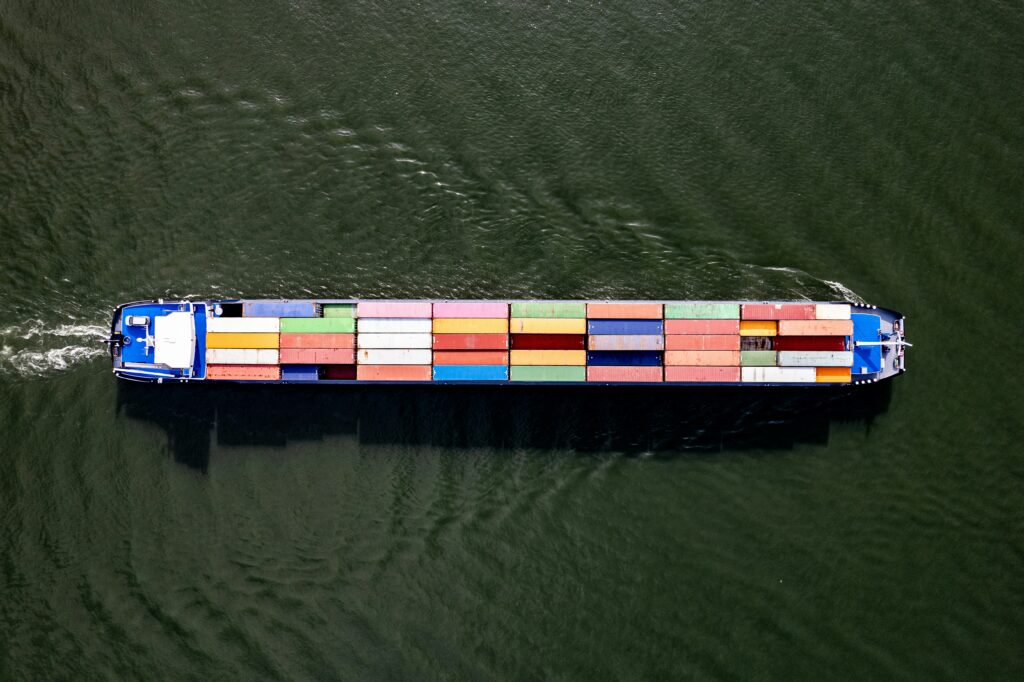
Distance is only one part of freight emissions. Sea freight, rail, road, and air transport each have different environmental profiles, which means the way goods travel matters alongside how far they travel.
For a business reviewing its supply chain, this means looking beyond a simple map. The combination of distance, transport mode, load efficiency, and shipment frequency determines the wider logistics impact.
Long supply chains can create pressure for expedited freight
International supply chains can also become more carbon-intensive when something goes wrong.
A delayed vessel, unexpected demand increase, stock shortage, or urgent customer requirement may create pressure for faster alternatives. Expedited shipments, air freight, or inefficient partial loads can significantly change the environmental and financial cost of getting goods to their destination.
Shorter supply chains give businesses more room to respond without immediately relying on emergency logistics.
Responsive manufacturing can reduce logistics emissions from emergency freight
When production sits closer to the customer, replenishment can happen faster. Businesses can react more quickly when forecasts change, demand increases, or an urgent requirement appears.
That responsiveness strengthens the connection between sustainability and resilience. How Flambeau ensures supply chain resilience through local manufacturing explores why shorter supply chains can provide greater control when market conditions change.

How local manufacturing reduces supply chain emissions and improves distribution
Long lead times encourage larger buffers
Businesses often protect themselves against long international lead times by holding additional stock. That approach can reduce availability risk, but it also creates other requirements around warehousing, inventory management, and working capital.
Local manufacturing can support shorter replenishment cycles, allowing businesses to plan around more responsive supply rather than relying solely on large buffers against uncertainty.
Faster replenishment can improve logistics efficiency
When manufacturers can respond more quickly, customers have greater flexibility around when and how much they order.
That can help align production more closely with actual demand and reduce the pressure to place oversized orders simply because another shipment may be weeks away. The result can be a more responsive and efficient supply model overall.
Lower supply chain emissions can support greater resilience
Environmental improvements do not always require a commercial compromise. In many cases, the same decisions that simplify logistics also improve resilience.
Shorter transport routes can mean fewer freight emissions. They can also mean shorter lead times, less exposure to international disruption, and faster communication when something changes.
That is why the commercial case explored in cost savings with UK injection moulders: the true value of staying local extends beyond headline part pricing. The structure of the whole supply chain affects total value.

Where reshoring fits into logistics emissions reduction
Reshoring changes the structure of the journey
Moving production closer to the end market changes much more than the location of the factory. It changes the logistics architecture around the product.
International shipping, export handling, some port movements, and parts of the warehousing chain may reduce or disappear entirely. For businesses trying to reduce logistics emissions, that structural change can be more powerful than optimising individual freight stages.
The environmental case sits alongside the commercial one
Reshoring can provide shorter lead times, closer communication, stronger quality control, and less exposure to volatile international logistics. Reduced transport emissions then become another benefit of the same decision rather than an isolated sustainability measure.
That broader argument sits naturally alongside why UK manufacturing matters in a global market, where location is considered in terms of resilience, talent, quality, and long-term competitiveness as well as geography.
Real projects can demonstrate the wider value
The strongest argument for reshoring comes when environmental and operational advantages work together.
In reshoring manufacturing to the UK: Flambeau Europe’s partnership with Makita, bringing production closer to the end market created a more responsive supply relationship while reducing dependence on a long international production route.
That is where reshoring becomes commercially compelling: several business advantages improve at once.
How Flambeau Europe helps reduce logistics emissions through UK manufacturing
Ramsgate puts production inside the UK market
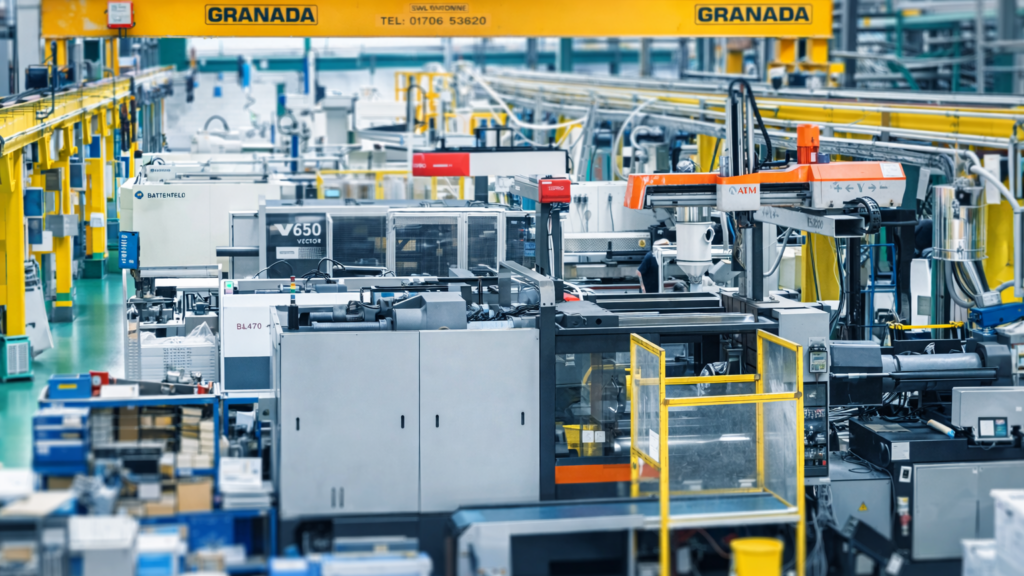
Flambeau Europe manufactures from Ramsgate, Kent, allowing UK customers to begin their supply chain domestically rather than first bringing components into the country from thousands of miles away.
Our manufacturing in Ramsgate, UK base therefore offers more than geographical convenience. It gives customers the opportunity to shorten the physical distance between production and demand.
Local production supports more responsive supply
Producing closer to customers also supports quicker communication and more flexible delivery planning. When requirements change, the manufacturing and logistics response does not have to work around lengthy international transit times.
That creates a supply chain that can be both lower-impact and easier to manage.
Sustainability extends beyond transport
Reducing freight distance is only one part of Flambeau Europe’s sustainability approach. We also focus on practical improvements within production itself, including waste reduction, process efficiency, material reuse, and investment in more efficient manufacturing technology.
For example, plastic regrind process: how Flambeau reduces scrap waste shows how production material can be managed more efficiently alongside wider efforts to reduce environmental impact.
The common thread is practical action. Sustainability works best when it improves how the business operates as well as reducing its environmental footprint.
What businesses should ask about their own logistics emissions
Businesses reviewing their supply chain can start with several straightforward questions:
- Where is the product manufactured relative to the market it ultimately serves?
- Which transport stages exist purely because of that manufacturing location?
- How frequently does the same freight journey repeat?
- Does the current lead time require larger safety stocks than necessary?
- How often does disruption result in expedited freight?
- Could manufacturing closer to the customer remove an entire logistics stage rather than merely optimise it?
The aim is not to assume that local manufacturing is automatically the right answer in every situation. It is to understand the true impact of the current supply-chain design and whether a simpler alternative could deliver greater value.
Conclusion: reduce logistics emissions by shortening the journey
Businesses looking to reduce logistics emissions should consider more than the efficiency of individual vehicles or freight providers. They should also question whether every stage of the journey needs to exist at all.
Manufacturing closer to the end market can remove thousands of unnecessary transport miles, reduce dependence on international logistics, and create a simpler route from production to customer. Those environmental gains can sit alongside faster response times, stronger supply-chain resilience, and better operational control.
At Flambeau Europe, our Ramsgate manufacturing base allows customers to explore exactly that kind of shorter, more responsive supply model. If your business is reviewing its existing manufacturing footprint or considering bringing production closer to home, contact us to discuss what a UK-based manufacturing solution could look like.